

Our Lady of the Miraculous Medal: The Story Behind the Medal
Every year on 27 November the Church remembers Our Lady of the Miraculous Medal. It is one of the best-loved Marian devotions in the world, and it began with a quiet young woman in a convent in Paris.
Paris, 1830
Catherine Labouré was a novice with the Daughters of Charity, in their house on the Rue du Bac in Paris. In 1830 she saw Our Lady in the convent chapel on several occasions. On 27 November Catherine saw Mary standing on a globe, with rays of light streaming from her hands. Around her ran the words: O Mary, conceived without sin, pray for us who have recourse to thee.
Then the vision turned, and Catherine saw the other side of the medal: a large letter M with a cross above it, and beneath it the hearts of Jesus and Mary, one crowned with thorns and the other pierced by a sword. Twelve stars surrounded them. Catherine understood that Our Lady wanted a medal to be made, and that those who wore it with trust would receive great graces.
A medal that spread quickly
The first medals were struck in 1832 with the approval of the Archbishop of Paris. That same year a cholera epidemic swept the city, and many people reported healings and conversions among those who wore the medal. Soon it was being called the Miraculous Medal, and the devotion spread quickly.
Catherine told only her confessor about the visions and spent the rest of her life in hidden service, caring for elderly people in need. She died in 1876 and was canonised in 1947.
What the medal shows
- On the front, Mary stands on a globe with a serpent beneath her feet, surrounded by the prayer, which is also a profession of faith in her Immaculate Conception.
- The twelve stars recall the woman crowned with twelve stars in the Book of Revelation.
- On the back, the M and the cross show Mary's closeness to the saving work of Christ, and the two hearts show their shared love for us.
The prayer on the medal points to another feast. In 1854, twenty-four years after the visions, the Church defined the Immaculate Conception, and four years later Our Lady told Bernadette at Lourdes, I am the Immaculate Conception. You can read about that feast in 8 December: The Feast of the Immaculate Conception.
Keeping the day
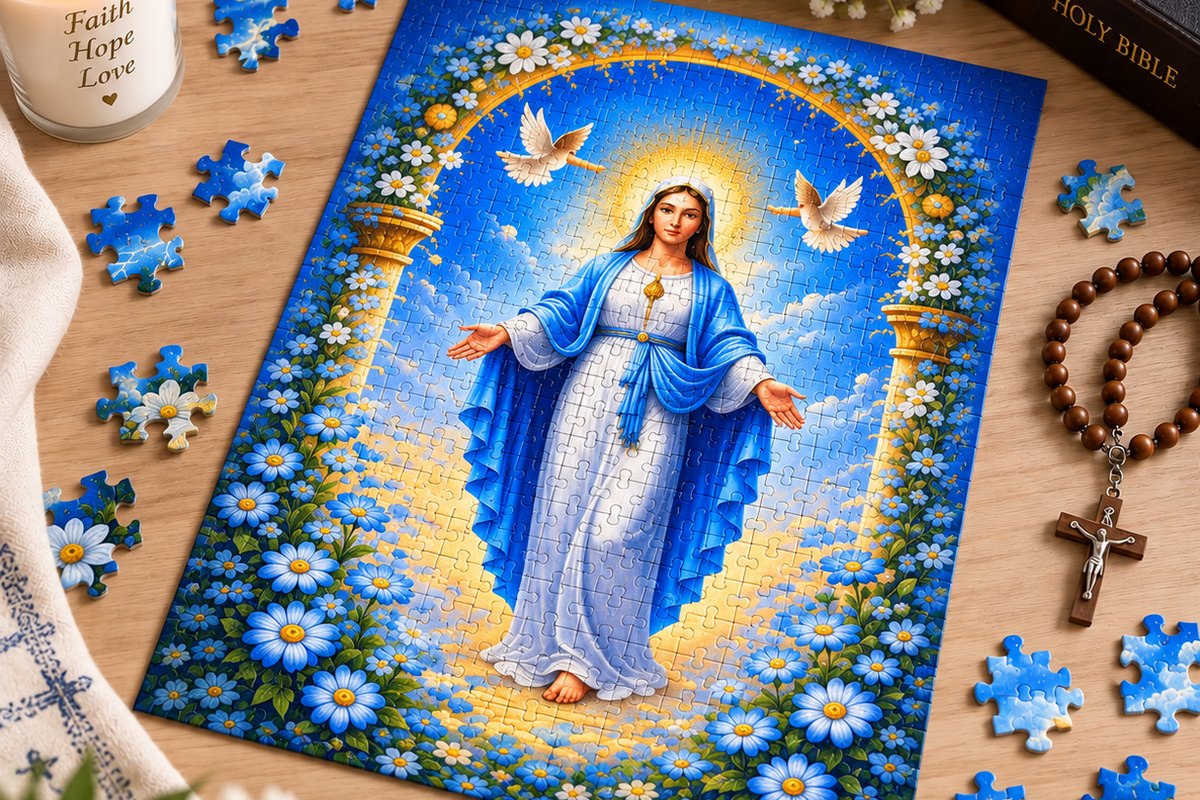
Many Catholics pray the short prayer on the medal on 27 November, or wear a medal as a quiet reminder of Our Lady's care. If you like to have something for your hands on a winter evening, our Our Lady of the Miraculous Medal 1000-Piece Jigsaw (€15) is a lovely way to spend time with her image. You may also like our Our Lady of Knock medal (€5) and the Knock Shrine 50th Anniversary medal (€5).
Marian Holy Art is an Irish Catholic company offering unique religious gifts and devotional items inspired by Lourdes, Knock and the Catholic faith. Our products are available exclusively through Marian Holy Art and are sold at Knock Shrine, Ireland.